
Lou Salamon (1997)
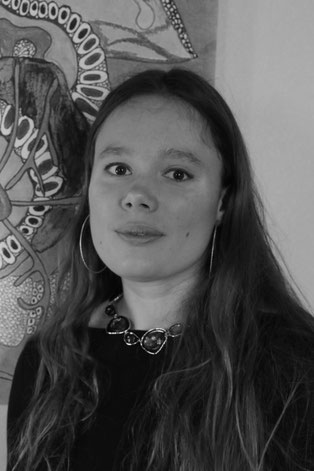
Contemporary embroidery and textile artist exhibited at Galerie Catherine Pennec in Clermont-Ferrand, Auvergne (France) in November and December 2025 and soon in summer 2026 as part of the FITE Textile Biennial.
Biography
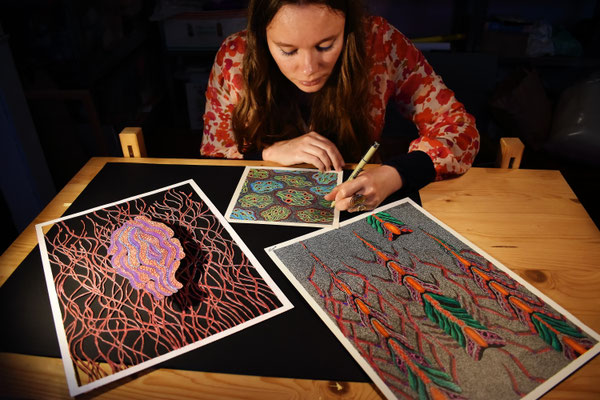
Since childhood, Lou Salamon has been captivated by the living world. She meticulously draws insects and plants, exploring their cellular structures and remaining attuned to the subtle murmurs of nature. Her fundamental, impulsive need to create is woven into her very being. Her perception of the world manifests through the development of textile and organic materials.
After graduating from the École Supérieure des Arts Appliqués et du Textile, she felt a stronger pull toward material and art rather than design. She chose Haute Couture embroidery as her artistic medium and trained in Lunéville embroidery.
Following an experience as a freelance embroidery artist for Charvet Place Vendôme, she decided to devote herself entirely to artistic creation. The acquisition of one of her large-scale works by an art collector marked the beginning of her career. Her work soon gained recognition, leading to an exhibition at the Musée du Textile de Labastide-Rouairoux, where her contemporary embroideries resonated with the historic craftsmanship of the Clarisses de Mazamet. Since then, her works have traveled from exhibition to exhibition, engaging in dialogue with materials such as glass, concrete, and ceramics.
At the heart of her artistic research lies the experimentation with material contrasts and the creation of hybrids. Through embroidery, she explores the boundary between dream and reality, between the fusion and duality of beings and materials. This medium offers her immense creative freedom, allowing her to confront personal anxieties and traumas. Her work reflects not only her inner upheavals but also those of the contemporary world. At times, embroidery becomes a dance, a trance-like movement, a dissolution of self in the act of creation.
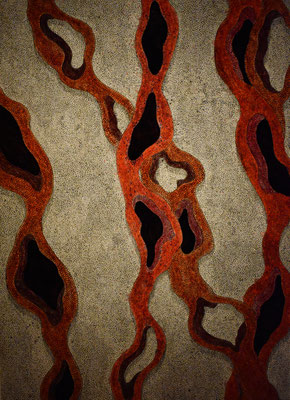
She evokes cracks and voids in existence, translating them into rhythms and textures through thread.
Exhibitions
2025 | CLERMONT-FERRAND | "Eau et Lumière : Broder le vivant" | Galerie Catherine Pennec
2025 | ANGERS | Participation at the exhibition of internation contest of mini-textiles | Musée Jean-Lurçat et de la Tapisserie contemporaine
2024 | NANCY | Presentation de ses œuvres en vitrine | Galerie de l'Atelier
2024 | AUBUSSON | Exposition aux côtés des verres soufflés de Yukié Inaba | Atelier de l'artiste
2024 | SAINT-AUBIN-SUR-MER | Festival du Lin et de la Fibre Artistique | Église de Saint Aubin sur Mer
2023 | LABASTIDE-ROUAIROUX | "Des liens sacrés" | Musée du Textile de Labastide-Rouairoux
2022 | AUBUSSON | Présentation en résonance avec des tapisseries anciennes et contemporaines | Galerie Jabert, Aubusson
2020 | GUÉRET | Collective Exhibition | Quincaillerie numérique
Photography : Biya Ebogo
Lou Salamon in her studio
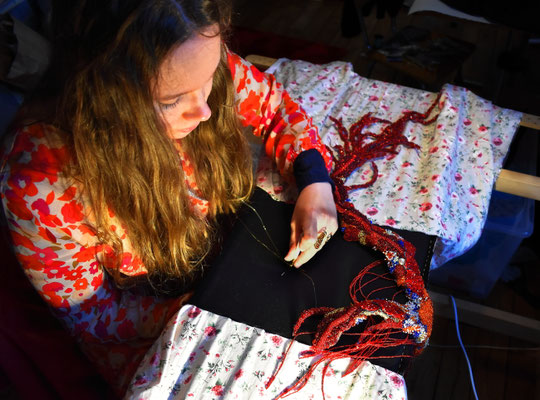
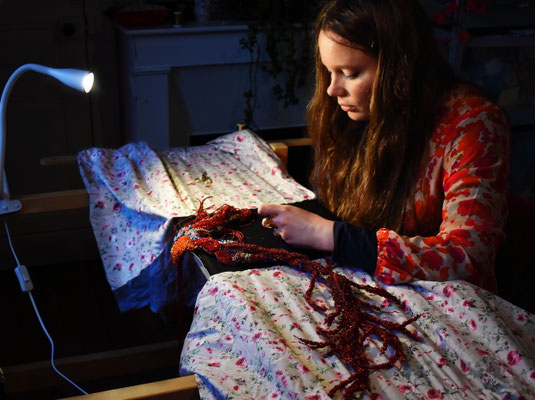
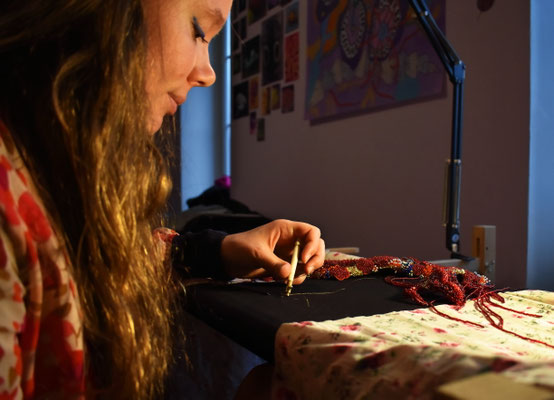
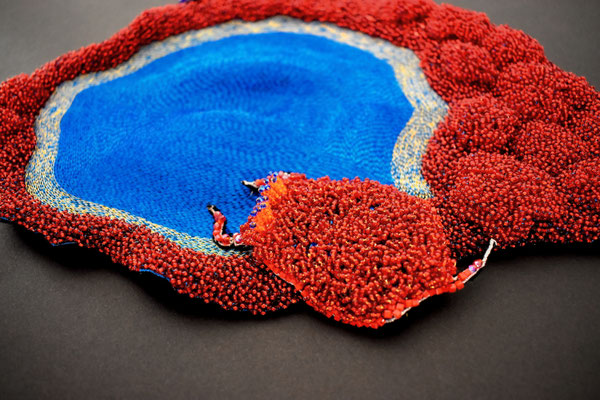
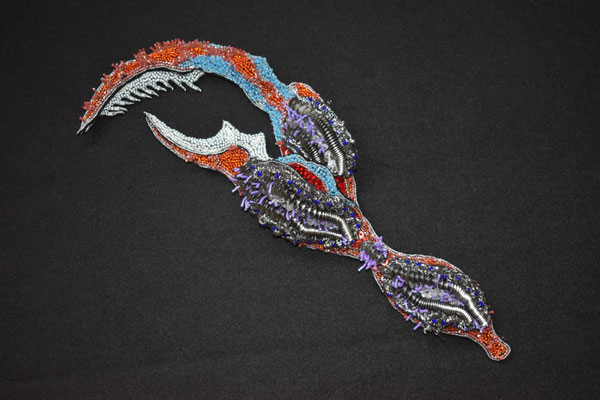
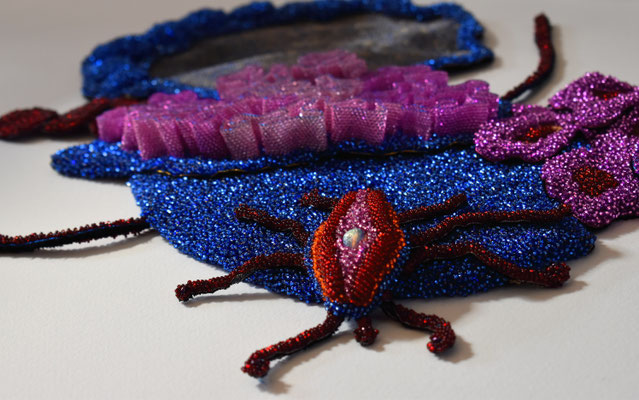
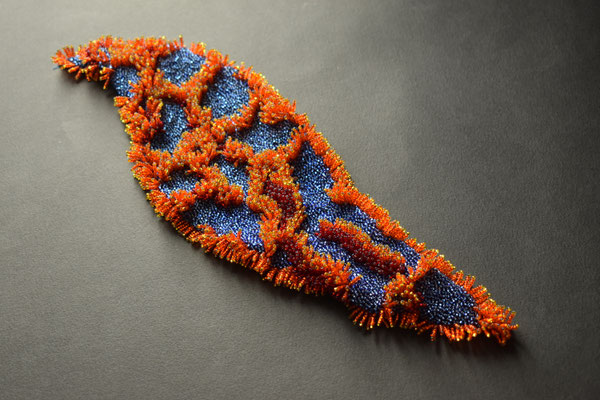
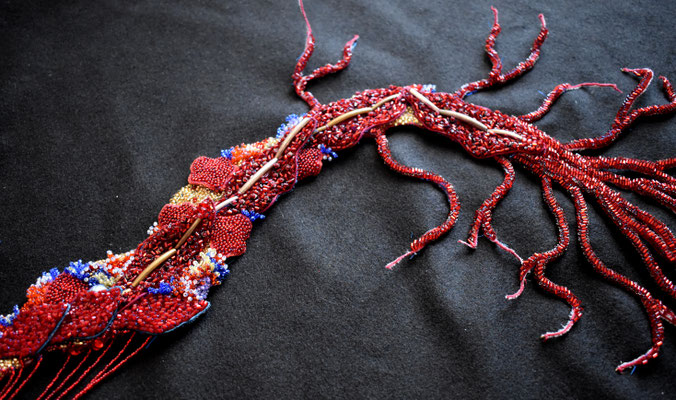
Embroideries - sculptures
Drawings
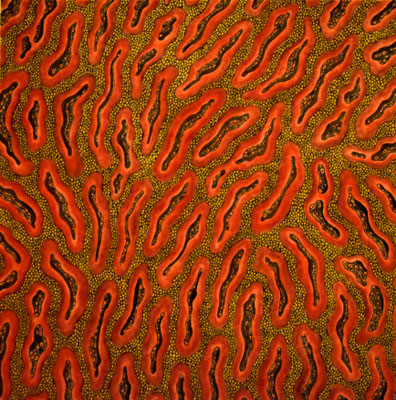
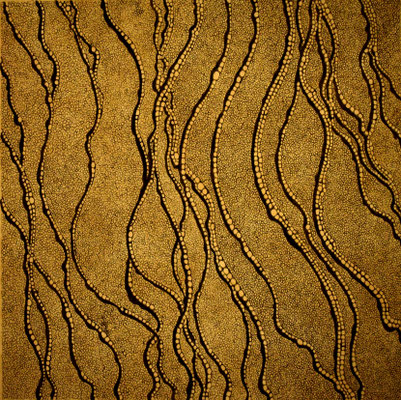
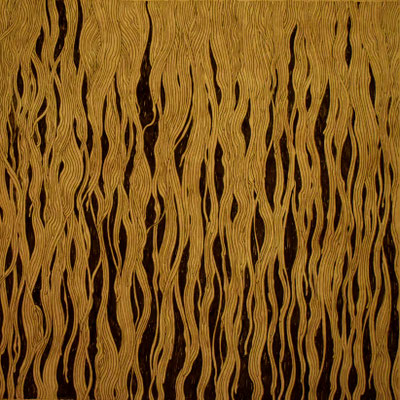
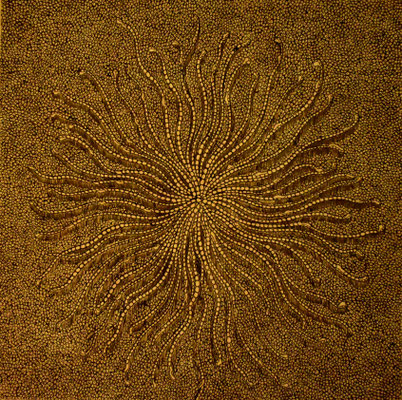
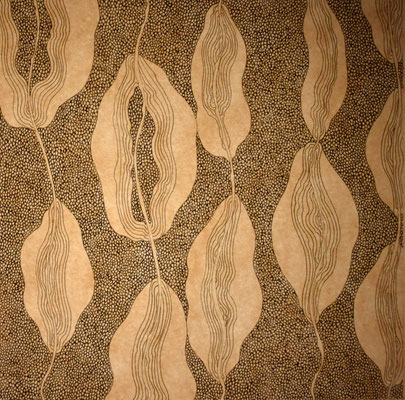
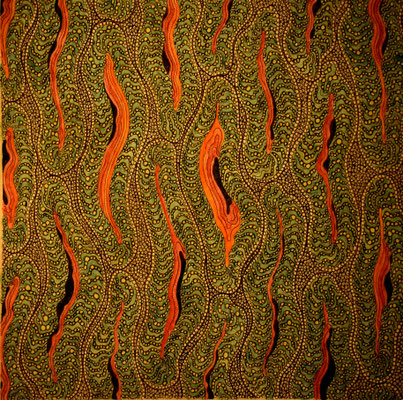
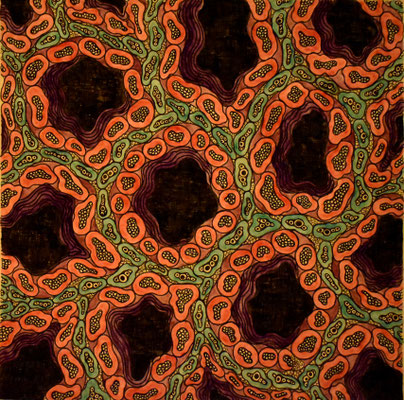
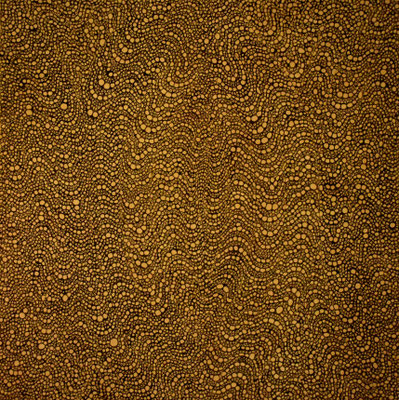
Embroideries on water colors
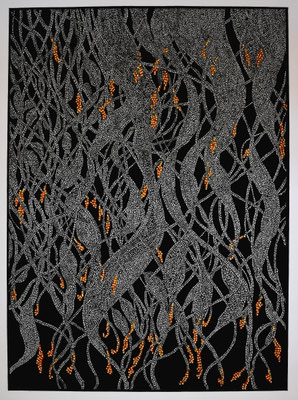
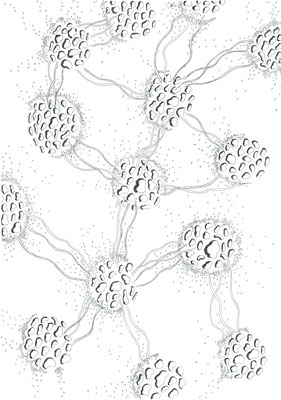
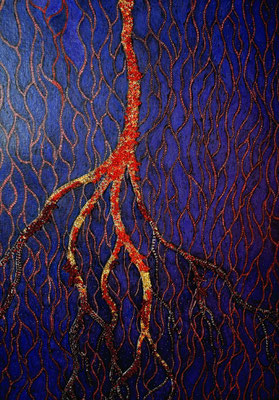
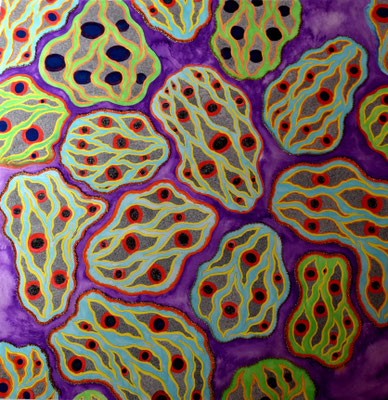
Interview between Lou Salamon and Catherine Pennec - October 31, 2025
Exhibition “Water and Light : Embroidering the Living”
From 28 November 2025 to 10 January 2026
Opening on 28 November from 6 p.m. in the presence of the artist
1. At the Sources of Creation : Childhood and the Call of the Living
CP : Lou, your exhibition is titled “Water and Light: Embroidering the Living”. From childhood, you were fascinated by the living world, drawing insects and plants, examining their cellular structures. How did this fascination for the living become an artistic vocation? Was there a precise moment when you knew embroidery would be your medium of expression?
Lou : My way of approaching the natural world is through hybridity. As a child, I was fascinated by Magritte’s paintings, especially his leaf-birds. I am passionate about the connections between different realms of life: blood vessels that resemble tree branches, a brain that evokes a sea sponge. As a child, I could spend hours trying to unravel the mysteries of bark structures or snail shells. From adolescence onwards, I chose embroidery as my medium because it combines graphic art with materiality. Embroidery makes it possible both to draw with thread and to create sensory surfaces that come to life through texture.
2. Water and Light: Symbols and Techniques
CP : The exhibition title mentions water and light—two elements central to your work. How do these themes appear in your embroideries? Through your choice of materials, colours, motifs, or the way light passes through your pieces?
Lou : Water and light always go together; I never treat them separately. Their evocation depends more on the material than the motif. The graphic movements in embroidery evoke flows; undulating motions are very present in my work, suggesting both hair and calm water. For light, water sometimes acts as a filter and at other times as an amplifier. Water can reveal the colours of light by breaking its prism.
I try to depict water in different forms: living, clear, shimmering water, but also murky waters. I draw inspiration from the dark, marshy waters of Creation in the Old Testament—primordial waters from which light emerges—as well as from ponds and stagnant waters teeming with life. These also symbolise the unconscious.
Water and light are recurring themes in philosophy. Within the cosmos, everything is connected: something creates a world within water, light, and the universe. The world is both diversity and unity, through an element that links all things. For Thales, one of the earliest philosophers, that element is water.
The motifs in my embroideries often suggest a uterine form. The uterus fascinates me because it relates to the idea of a mysterious matrix—the amniotic fluid is water. For Ferenczi, it relates to the concept of the oceanic feeling. The uterus also connects to music and rhythm: the mother’s heartbeat is the very first rhythm the foetus hears. The depths of water fascinate me, recalling the mystery of life’s creation. My formal language is nourished by the uterus, but also by the abyss and the unknown of the deep sea.
CP : The Lunéville beads (used in embroidery and haute couture) that you often work with capture and reflect light in a unique way. Why choose them? How do you use them to evoke water, fluidity—or, on the contrary, rigidity and fragility?
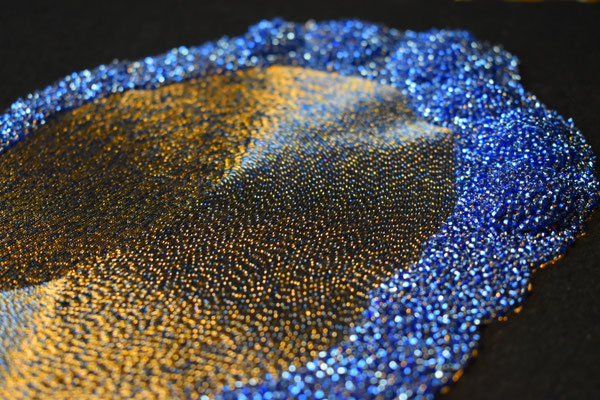
Lou : Glass beads evoke both mineral forms and the sparkle of water in sunlight or moonlight. I adapt my technique depending on the desired sensation. To convey mineral rigidity, I use profusion—beads sewn one on top of the other, like geological layers. To suggest lightness or water, beads are scattered lightly, like tiny reflections.
Metallic threads also bring light; depending on their colour, they create nuances within the bead and enhance its brilliance. Mineral representation, like that of water, is recurring in my embroideries. Corals—living beings made of minerals—are a strong inspiration.
I want my embroideries to evoke cells, an aquatic universe, and a starry sky all at once, and I play with the shine of beads to achieve this.
3. Embroidering the Living: Between Drawing and Embroidery
CP : You move from drawing to embroidery and back again. How does this dialogue between the two techniques work? Is drawing always the starting point, or can inspiration come directly from the act of embroidering?
Lou : Drawing is always the starting point for embroidery. Embroidery is a way of bringing light and movement to it. The drawing forms the basis, but embroidery is a free interpretation of it — the fluidity of the hand, like a dance, often takes precedence over strict, rigid reproduction. I begin with automatic, spontaneous drawings, which I then rework into motifs and later into elaborate embroideries. In my creative process, drawing represents the depths of the unconscious, while embroidery makes it appear, makes it visible, thanks to the light it brings.
The philosopher Alain wrote in The System of the Fine Arts that artists create and conceive at the same time: not everything is organised or planned beforehand. As a result, the finished embroidery sometimes looks nothing like the original drawing.
As for the titles of my works, they come from poems I create using the technique of automatic writing, which taps into the unconscious.
“Art is a territory of memory and desire where one can finally name the invisible.” — Louise Bourgeois
CP : Your works often seem to originate from a careful observation of nature. Can you tell us how a scene or a detail from the living world becomes an embroidery? Are there specific examples in the works presented in the exhibition?
Lou : I live in the Creuse region, where nature is sometimes wild, free, and untamed. I observe meticulously the movements of water — reflections, colours, and translucencies of lakes and rivers. I take in these landscapes deeply. Their vivid spring colours and warm golden autumn reflections are found in my works. For example, the colours of flowers in the Creuse remind me of coral and anemone tones, creating bridges between different realms of the living. I also spend time with naturalists in my close circle, observing plants, fungi, amphibians, and birds every week, which helps in my creative process. I’ve also been greatly inspired by Claire Nouvian’s photographs of the deep sea, published in her book Abysses. My work is sometimes suffocating in detail — dense, lush, abundant — aiming to represent a kind of living profusion that endlessly multiplies, like a colourful symphony. This is also why the idea of the motif is so present in my work: my hand-drawn motifs evoke cells and beings that multiply and resemble each other without being identical clones.
4. Embroidery as an Intimate and Universal Language
CP : Your practice addresses intimate, sometimes serious themes, and embroidery is an art traditionally associated with femininity. How does this heritage influence your approach to vulnerability, resilience, or transformation?
Lou : I am influenced by the works and embroideries of Louise Bourgeois, as well as the Nanas by Niki de Saint Phalle, for their abundant and fertile femininity — but also their ambiguity. Behind their apparent joy and bright colors, they also address serious subjects, such as violence against women.
Embroidery does not heal, but it sublimates horror, like Baudelaire’s Carcass. It speaks of femininity, of reclaiming it, of rebuilding it when it has been shattered. It speaks of damaged intimacies — whether feminine or masculine. However, it cannot erase lived experience. Each person can find resonance with their own heritage or story within the living materiality of embroidery. In my work, the idea that “the personal is political” doesn’t quite align; for me, every living body, every person, carries poetry and stories that must be seen for their individuality and mystery.
Moreover, embroidery — the act itself — connects us to something living. Knowing oneself as just a speck in a world teeming with life, looking around, is comforting. It opens a path to a kind of spirituality, lifting us out of ourselves and the tragic dimension of human existence. In its deeply feminine form, embroidery evokes the heritage of witches; my embroidered sculptures recall talismans and magical objects. In the Muslim tradition too, women embroider objects such as khamsa, shaped like birds and adorned with the Hand of Fatima, to protect their homes.
CP : In this exhibition, some works incorporate materials such as glass beads. How do these combinations allow you to explore contrasts between water and light, between fluidity and rigidity?
Lou : Glass beads evoke the art of stained glass, in both its Islamic and Christian forms. Just like stained glass, water is a filter — in contact with it, something appears, reveals itself. Light makes visible, but is not always visible in itself; water makes it visible, like glass, the prism, or the atmosphere — it is a space of mediation.
The notion of the surface of water can also be compared to the surface of skin. On that surface, something reveals itself, before disappearing back into the depths.
5. Gesture and Trance: Embroidering as a Dance
CP : You sometimes describe embroidery as a dance, a trance, a disappearance of the self within the gesture. How does this physical, almost performative dimension influence your work? Do you feel a difference between embroidering a motif inspired by water and one inspired by light?
Lou : The trance-like movement in embroidery comes from the repetitive nature of the gesture — regular like a heartbeat — carried out for hours and hours without taking a break. Embroidery becomes hypnosis. In Greek mythology, Dionysus is the god of trance, and his dance is a hypnotic art of depths, opposed to Apollonian art which is linked to clarity. In the music of Dionysus, rhythm dominates, while in Apollo’s, it is melody. Embroidered trance is therefore closer to Dionysian music when done feverishly, and closer to the heartbeat when it is slower.
CP : Does music accompany your work? If yes, which sounds or melodies inspire you when embroidering water, light, or the living?
Lou : My musical inspirations are numerous. I am influenced, for instance, by Mozart’s Requiem, by Billie Holiday, or by African-American blues rhythms such as Junior Kimbrough’s. Some pieces influence my way of embroidering through their rhythms — such as those by Roberto Fonseca (Cuban jazz), Guinean kora (e.g. musician Sekou Kouyate), Turkish groups oscillating between tradition and modernity (like Jarl Flamar & Olkan, live looping Voyons voir), or progressive rock influenced by the Middle East (for example Ataraxia by King Gizzard & the Lizard Wizard). These references share rhythms close to trance.
6. From Haute Couture to Art: A Deliberate Choice
CP : You worked in haute couture before devoting yourself to art. Why did you make this choice? In your view, what distinguishes an artist from an artisan in the world of embroidery?
Lou : I made this choice because the call of art was too visceral, too powerful. My experience in haute couture gave me technical skills that are extremely valuable today, as I use very specialised know-how at the heart of my artistic process. In embroidery, the artist is the one who appropriates the technique and sometimes takes liberties with it to express what lies deep inside. Graphic creation also plays a major role in their work. The artist is the one who develops a formal language and materials that have never before been explored. For me, the artist does not seek only to depict beauty — they also express ambiguity and can even provoke discomfort or rejection in the viewer. Their pieces evoke different emotions in each person and mean different things depending on individual experience. Thus, the embroidery artist speaks to the unconscious and does not aim solely to create beauty, which is what embroidery traditionally strives for.
The artisan, on the other hand, is the one who pursues the love and excellence of embroidery techniques with engineer-like precision. Their work obeys a specification.
Consequently, an artwork has a complete and unique individuality. In my work, embroidery has a free purpose and does not obey any set of rules.
“Art does not consist in the representation of a beautiful thing, but in the beautiful representation of a thing.” — Critique of the Power of Judgement, Kant.
For Kant, beauty in the aesthetic sense (unlike subjective preference) has universal value. Thus, art serves as a universal form of communication and a bridge between individuals and cultures.
“Only things whose most complete knowledge does not suffice to produce them belong to art.” — Kant.
Similarly, in The System of the Fine Arts, philosopher Alain explains that “in the realm of art, conception does not precede the work but is strictly contemporary with it. As a result, a work of art is only complete once the idea it carries reveals itself to its author, as to its first spectator.”
CP : What are the main difficulties you encounter in your practice, especially when working on large-scale pieces or ambitious projects like those presented here?
Lou : The main difficulty is the time required. These projects demand 10 to 12 hours of embroidery a day, for months on end — which is a real test for the body.
7. Inspiring Figures and Future Projects
CP : Which figures — artists or embroiderers — inspire you in your exploration of water, light, and the living?
Lou : My inspirations are many. I regularly immerse myself in the writings of Rainer Maria Rilke (for example, his collection Silver Serpents), and in the anatomical plates made by biologist Ernst Haeckel — drawings he claimed were purely scientific but which are, in fact, largely fantastical. Their profusion and abundance of detail fascinate me. I have also been inspired by the baroque depictions of plants in Huysmans’ À Rebours — they were an excellent starting point for creating embroidered textures.
In addition, due to my personal history, I was surrounded for years by Afghan and West African cultures. This significantly influences the aesthetics of my embroidery, particularly in terms of colour. I carry the sensibilities of the people who have been close to me within my unconscious, and these rise to the surface in my works. These are encounters — not travels — as I have lived in very mixed environments since childhood.
I am also deeply influenced by painters who stand at the crossroads of cultures and religions, such as Chagall and his stained glass, and by great fashion designers like Christian Lacroix, with his Spanish and Arlesian colours. The embroidery work in his dresses — its abundance and generosity — moves me.
CP : After this exhibition, what are your plans? Do you intend to continue exploring these elements, or are you drawn to other themes?
Lou : I would like to explore the themes of decay and life cycles, and continue creating large wall hangings and sculptures based on my cellular drawings. I’d like to study the relationships between the atom and the cosmos, between the infinitely small and the infinitely large — through embroidery.
8. A Word for the Public
CP : To conclude, what message or emotion would you like to share with visitors discovering “Water and Light: Embroidering the Living”?
Lou : I can’t wait to hear visitors’ feedback — what the works evoke for them, the feelings and sensations they experience when facing them. I would love to know which domains of the living resonate the most for each person: human? Animal? Plant? Mineral? Imperceptible beings?


La Galerie Catherine Pennec est une galerie d'art contemporain nichée au pied de la Cathédrale de Clermont-Ferrand en Auvergne. Elle présente des artistes émergents et confirmés à travers des expositions de peintures, sculptures, broderies, verreries, céramiques, photographies artistiques et installations.
réalisation du site : nivoit-multimedia.com